When it comes to efficient storage, 40 foot storage containers are an excellent choice. They offer ample space for various items, from household belongings to business inventory. However, maximizing the use of these containers is essential for organization and accessibility.
One key aspect is careful planning. Assess what items will go inside before starting. Often, we end up cramming everything, leading to chaos. This not only wastes space but time during retrieval. Another point to consider is the arrangement of items within the container. Heavier items should be placed at the bottom, while lighter ones go on top.
Creating a labeling system can also enhance efficiency. Simple tags can save hours during a search. Yet, we may underestimate their importance, often leaving items in disarray. It's crucial to reflect on these organizational habits. By taking a moment to strategize, we can transform our 40 foot storage containers from mere storage spaces to well-organized hubs.

When it comes to storing items efficiently, understanding the dimensions and capacity of a 40-foot storage container is crucial. These containers typically measure 40 feet long, 8 feet wide, and 8.5 feet high. This provides around 2,390 cubic feet of storage space. It’s important to visualize what this size means. You can fit about 10 standard-sized pallets inside. However, many people overlook the height. Stack items vertically to maximize space. But, be cautious, as tall stacks can become unstable.
Packing effectively also requires planning. Always categorize your items. Use sturdy shelving if possible. This helps locate items easily. Label everything clearly. A poor labeling system can lead to frustration. Imagine needing an item buried beneath boxes. You waste time searching. Create a plan before you start filling the container. Reflect on what you truly need to store. Not everything adds value.
Utilizing a 40-foot container can transform your storage experience. With careful organization, you can avoid chaos. Even with the best strategies, challenges arise. You may find certain items don’t fit as expected. Be prepared to adjust your layout as necessary. Embrace a flexible mindset for the best results.
| Feature | Measurement/Value | Usage Tips |
|---|---|---|
| External Length | 40 ft (12.19 m) | Ensure enough space in your yard. |
| External Width | 8 ft (2.44 m) | Plan for maneuvering and placement. |
| External Height | 8.5 ft (2.59 m) | Utilize vertical space effectively. |
| Internal Length | 39.5 ft (12.03 m) | Use shelving for organization. |
| Internal Width | 7.7 ft (2.35 m) | Create walking paths for easy access. |
| Internal Height | 7.9 ft (2.39 m) | Store bulky items on upper shelves. |
| Volume | 2,390 cubic feet (67.7 cubic meters) | Maximize with stackable boxes. |
| Max Weight Capacity | 50,000 lbs (22,680 kg) | Distribute weight evenly across the floor. |
When choosing a 40-foot storage container, consider its key features for enhanced organization. The spacious interior allows for efficient storage of various items. You can fit furniture, boxes, and tools. Optimize its use by implementing shelving units inside. This maximizes vertical space and keeps things off the floor.
Ventilation is another essential feature. Proper airflow prevents mold and mildew, especially in humid climates. Consider containers with ventilation openings to maintain a dry environment. Label storage bins clearly. This simple step saves time when searching for specific items.
Security features are also important. Look for containers with strong locks and durable materials. However, even robust containers can be vulnerable. Regular checks and changes to your locking mechanism might be necessary. Overall, while 40-foot containers offer ample storage, proper organization and maintenance are key to their effectiveness.
This chart illustrates the various usage percentages of 40-foot storage containers across different sectors. Residential use dominates the statistics, followed by commercial and construction purposes, highlighting their versatility in organization and storage solutions.
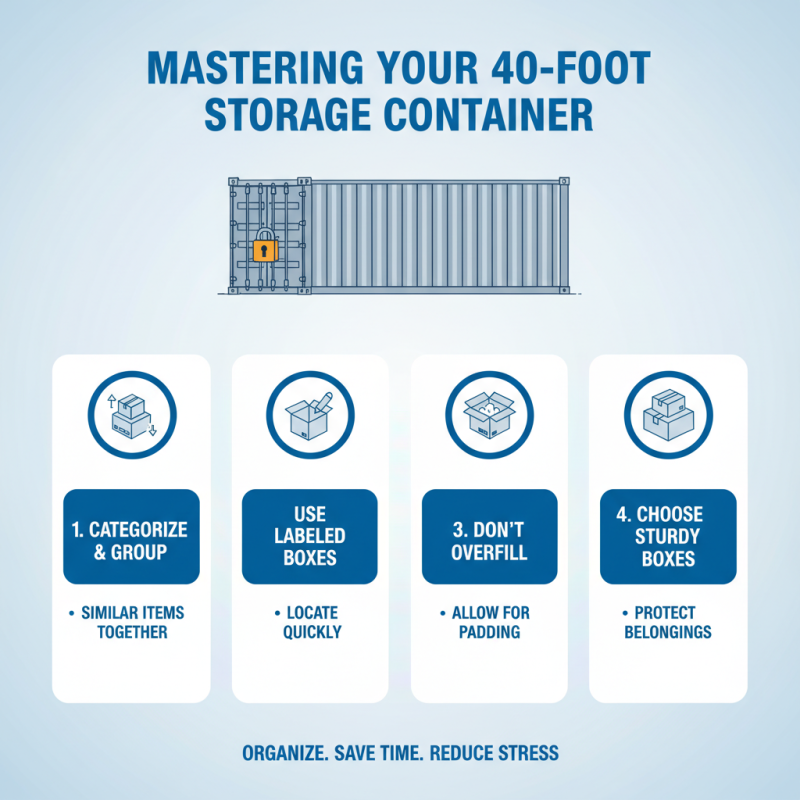
When it comes to using a 40-foot storage container, organization is key. Start by categorizing your items. Group similar things together. This can save time and reduce frustration when accessing your belongings. Use sturdy boxes for packing. Labeled boxes will help you locate items quickly. Avoid filling each box to the brim; leave some space for padding.
Consider the weight distribution when loading. Heavier items should go on the bottom. Place lighter boxes on top to prevent crushing. Utilize vertical space; stack boxes efficiently. This maximizes the container’s capacity. If you have large items, think creatively. Can they be disassembled? Smaller pieces can fit into gaps.
Remember, it’s okay to make mistakes. You might find that certain items are hard to reach. Reflect on how you organize and adjust as needed. Bring your tools for easier assembly and disassembly. Keeping a checklist could also ensure you don’t miss anything during the packing process. Stay flexible and adaptable, as this can lead to better organization over time.
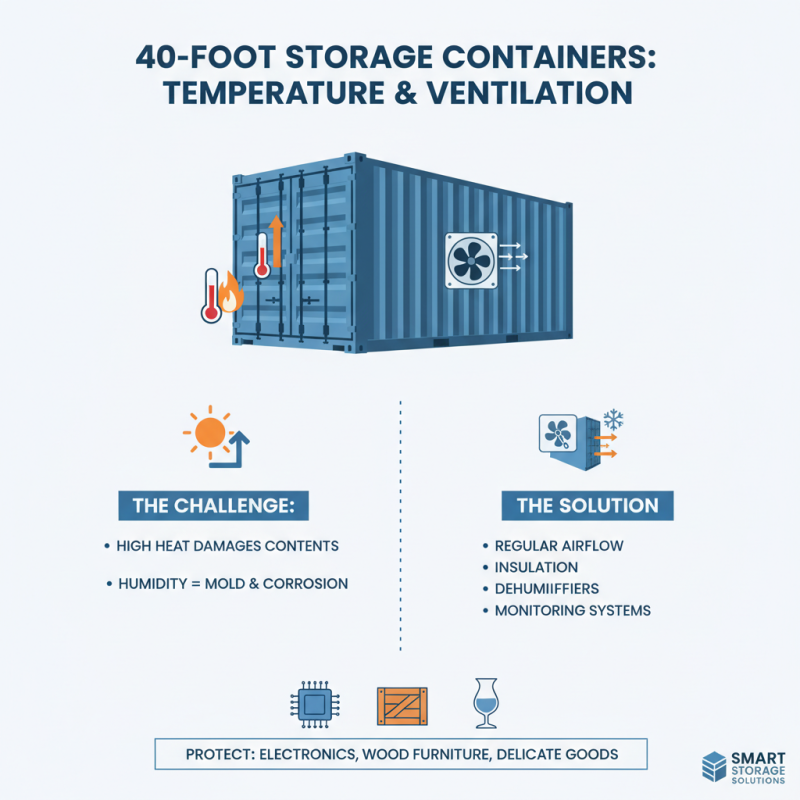
When using 40-foot storage containers, temperature control and ventilation are crucial. Without proper management, contents can suffer. High temperatures can lead to damage. Electronics, wood, and delicate items are particularly vulnerable.
Consider adding ventilation systems. Simple solutions like vents or fans can help regulate airflow. This prevents humidity buildup. Humid conditions can promote mold and mildew. It’s essential to regularly check the container for any signs of moisture. Even small leaks can cause significant issues over time.
Insulation also plays a vital role. Insulating the walls can keep temperatures stable. However, this can be a tricky balance. Too much insulation may trap heat, leading to overheating. Keep an eye on temperature fluctuations throughout the year. Utilize temperature monitoring devices for accurate readings. This will ensure your items are safe and well-preserved. Regularly reviewing your setup helps improve efficiency. It allows you to make adjustments and learn from past oversights.
When using 40-foot storage containers, efficient management is key to maximizing space. Utilizing an inventory system can significantly enhance the organization of stored items. According to a report by the Warehousing Education and Research Council, effective inventory systems can reduce the time spent on locating items by up to 50%. This statistic highlights the value of a structured approach.
Implementing an inventory management tool lets you categorize items effectively. Color-coded labels or barcodes streamline storage processes. Popular industry practices suggest maintaining an up-to-date inventory list to avoid redundancy in storage. However, many organizations overlook regular audits. They can miss out on opportunities to declutter, leading to unnecessary space consumption.
Additionally, tracking movement trends can help identify frequently accessed items. Studies indicate that 30% of operational costs arise from inefficient storage practices. By reviewing inventory flow periodically, you can make better decisions about your storage needs. While the goal is to be completely organized, it's important to acknowledge that perfection is unattainable. Assessing and adjusting your system is vital for continuous improvement.
If for some reason you did not find the service or product you need, you can always leave a request for a free consultation and get an answer.