
China Top 10 Automated Parking Machine Manufacturers?
China’s rapid urban growth is intensifying pressure on limited parking space. In dense districts, a conventional garage can consume valuable land while drivers circle for several minutes. Automated Parking Machine systems offer a different approach. They use lifts, pallets, shuttles, or robotic carriers to store vehicles vertically and systematically.
Market data supports this shift, although published estimates are not identical. Fortune Business Insights valued the global automated parking system market at approximately USD 2.04 billion in 2023. Its report projects continued growth through 2032, driven by urban congestion, land costs, and smart-city investment. Grand View Research also identifies strong demand for automated parking technologies, particularly in Asia-Pacific. These figures should be read carefully. Definitions, regional coverage, and forecasting methods vary between research firms.
China has become an important manufacturing base for this sector. Local producers supply equipment for residential towers, hospitals, commercial complexes, transport hubs, and public facilities. However, capacity alone does not prove reliability. A serious comparison must examine lifting accuracy, control software, emergency access, installation records, maintenance response, and compliance with applicable safety requirements. Noise, retrieval time, weather resistance, and after-sales support matter in daily operation.
This guide reviews China’s top 10 Automated Parking Machine manufacturers through practical and technical criteria. It considers product range, engineering experience, export capability, project evidence, and customization strength. Some rankings remain debatable. That is reasonable. Public company data is often incomplete, and impressive brochures cannot replace verified site performance. Buyers should request references, test recovery procedures, and inspect the details behind every claimed specification.
Define Automated Parking Machines Under GB/T 51408-2021
China Top 10 Automated Parking Machine Manufacturers?
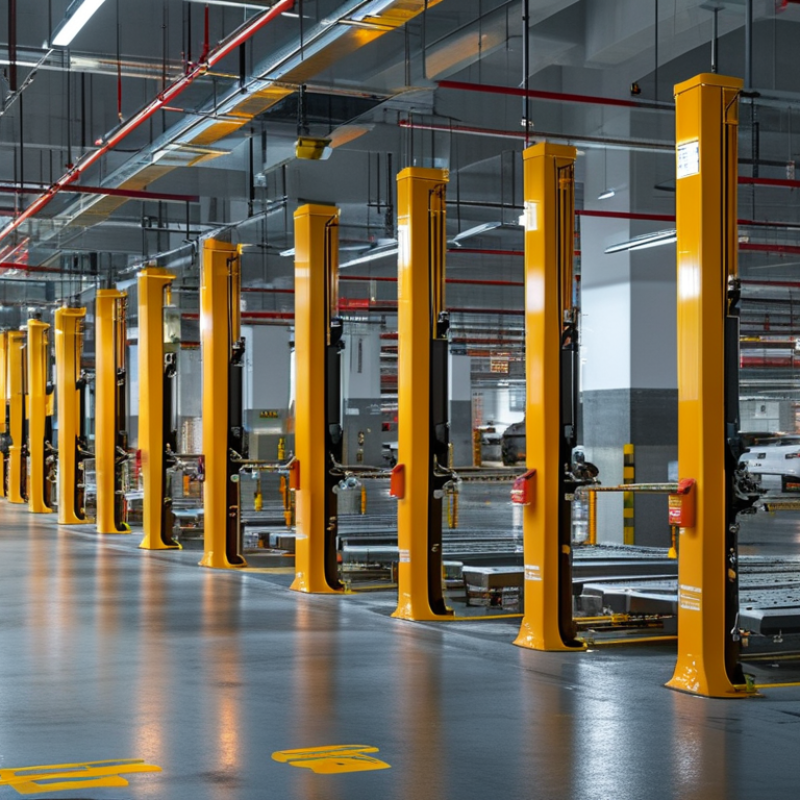
Under GB/T 51408-2021, an automated parking machine is more than a compact car-storage device. It is an engineered system that moves, positions, stores, and retrieves vehicles through mechanical equipment. Typical functions include lifting, conveying, rotating, sliding, and controlled vehicle access. The standard focuses on engineering requirements across planning, design, construction, acceptance, operation, and maintenance. Therefore, a manufacturer should demonstrate system integration, not only attractive equipment photos.
A reliable evaluation should examine load capacity, parking dimensions, emergency stopping, protective barriers, sensors, electrical controls, and fire-related coordination. Maintenance access also matters. A machine may save valuable urban land, yet poor circulation design can create delays during peak retrieval periods. Site measurements, vehicle-size limits, noise control, and operator training deserve equal attention. Paper compliance is not enough. Real projects often reveal small weaknesses, such as unclear instructions or inconvenient inspection points.
Tips: Ask for test records, maintenance schedules, safety-device specifications, and installation references. Check whether the proposed system matches GB/T 51408-2021 and applicable local requirements. Do not judge the top ten by ranking claims alone. Compare engineering evidence, response time, spare-parts support, and lifecycle performance. One detail is easy to miss: user experience can determine whether a technically advanced parking machine succeeds.
China Top 10 Automated Parking Machine Manufacturers? – Define Automated Parking Machines Under GB/T 51408-2021
Manufacturer-neutral comparison of ten automated parking machine configurations commonly evaluated in China. No company or brand information is included.
| No. | Equipment Configuration | Vehicle Handling Principle | Typical Application | Space Utilization Profile | Primary Design Verification | Operational Characteristics | GB/T 51408-2021 Relevance |
|---|---|---|---|---|---|---|---|
| 1 | Vertical Lifting System | Vehicles are moved vertically between parking levels by a lifting platform or carriage. | Urban sites with limited land area and medium- to high-rise parking requirements. | High land efficiency | Lift load capacity, guide rails, braking systems, landing accuracy, emergency lowering, and structural stability. | Clear separation between vehicle storage and vertical transport. | Applicable |
| 2 | Vertical Circulation System | Vehicles are carried by continuously circulating pallets or platforms arranged vertically. | Small or medium parking facilities requiring relatively simple circulation. | Moderate to high | Continuous circulation control, pallet alignment, anti-fall protection, synchronization, and access-zone safety. | Suitable for repeated short-distance parking movements. | Applicable |
| 3 | Horizontal Circulation System | Parking platforms circulate horizontally to bring the selected vehicle to the access position. | Basements, compact urban plots, and facilities with constrained turning areas. | Moderate | Platform movement, track alignment, collision prevention, access control, and floor-load distribution. | Uses horizontal circulation to reduce internal driving lanes. | Applicable |
| 4 | Multi-Layer Circulation System | Platforms circulate through multiple levels using combined horizontal and vertical movement. | Projects requiring flexible multi-level storage within a compact footprint. | High | Interlocking of lifting and transfer motions, level coordination, structural loads, and evacuation provisions. | Supports multi-level automated retrieval sequences. | Applicable |
| 5 | Plane Movement System | Transfer equipment moves vehicles or parking pallets horizontally on a fixed floor or parking level. | Large basement garages and sites with broad floor plates. | Moderate | Transfer path clearance, positioning accuracy, floor flatness, vehicle restraint, and pedestrian segregation. | Often integrated with lifts or transfer equipment. | Applicable |
| 6 | Lift-and-Transfer System | A platform lifts a vehicle and transfers it between adjacent parking positions or levels. | Residential, commercial, and public parking structures with modular layouts. | High | Combined lifting and transfer sequences, mechanical interlocks, platform stability, and access protection. | Flexible arrangement with multiple transfer directions. | Applicable |
| 7 | Stacker System | A powered platform or carrier stacks vehicles vertically or horizontally in designated spaces. | Residential parking, vehicle storage, and sites requiring increased capacity per bay. | High | Load distribution, pallet retention, height clearance, anti-overload protection, and mechanical locking. | Compact layout with a defined access sequence. | Applicable |
| 8 | Roadway Stacking System | A stacker crane or carrier travels along a dedicated aisle to store and retrieve vehicles. | Large automated garages with repeated rows of vehicle storage positions. | Very high | Crane travel, rail or guide alignment, aisle protection, position detection, emergency access, and fire-safety coordination. | Centralized movement with automated location management. | Applicable |
| 9 | Simple Lifting System | A lifting device raises or lowers a vehicle platform between two parking positions. | Small garages, private developments, and retrofit parking projects. | Low to moderate | Rated load, lifting-chain or screw mechanism, platform locking, limit switches, and safe access conditions. | Simple operating sequence and comparatively limited automation scope. | Applicable |
| 10 | Box-Type Automated Parking System | The vehicle is placed in a transfer compartment and transported to a storage position without driver access inside. | High-density urban garages, mixed-use buildings, and fully automated parking facilities. | Very high | Vehicle dimension detection, transfer-room safety, fire protection, ventilation, access control, and system reliability. | Driver-free internal circulation with centralized control. | Applicable |
Technical note: GB/T 51408-2021 is used here as the design and safety reference for mechanical parking garage planning and equipment integration. Final selection must also verify vehicle dimensions, rated loads, building structure, fire protection, electrical systems, emergency operation, maintenance access, and local approval requirements.