China Top Small Shipping Container Manufacturers and Prices
China has become a major source of compact containers for storage, transport, retail, construction, and specialized logistics. This guide examines China’s top small shipping container manufacturers and their typical price ranges. It focuses on product quality, customization, factory experience, and after-sales reliability.
A small shipping container may measure six, eight, or ten feet, depending on the supplier. Common features include corten steel panels, lockable cargo doors, marine-grade plywood floors, and forklift pockets. Some buyers need insulated walls, ventilation, side doors, or electrical fittings. These options can change the final cost considerably. Prices may also depend on steel thickness, paint systems, order quantity, shipping distance, and seasonal factory demand. Cheap quotes need careful checking.
No list is perfect.
Our comparison approach considers manufacturers with visible production capabilities, export experience, clear specifications, and consistent communication. It also highlights practical questions buyers should ask before paying a deposit. Can the factory provide recent product photos? Are welding points clean and continuous? Does the quoted price include fittings, inland delivery, or export preparation? Are inspection records available?
These details often matter more than a polished website. A low price may hide thin materials, unclear warranty terms, or expensive modifications. In contrast, a slightly higher quotation may include stronger flooring, better corrosion protection, and safer door hardware. Buyers should verify current specifications directly with each manufacturer, because product ranges and prices change frequently. Careful comparison remains essential, especially when a container will face coastal weather, repeated handling, or long-term outdoor use.
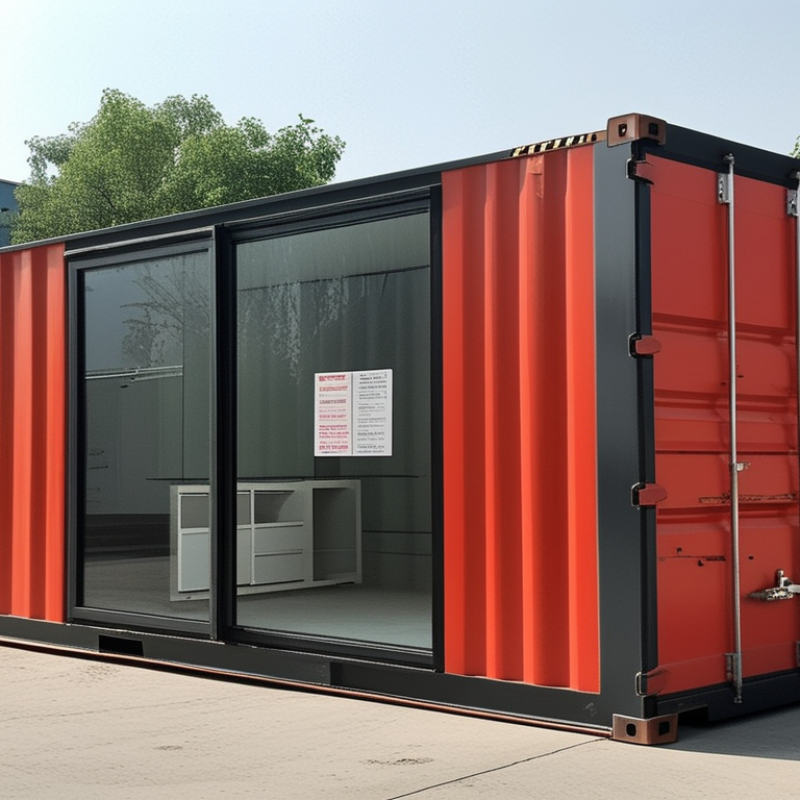
Small Shipping Containers: Types, Uses, and Standard Dimensions
Small Shipping Containers: Types, Uses, and Standard Dimensions
Small shipping containers suit compact storage, job sites, retail stock, and temporary workshops. Common sizes include 6-foot, 8-foot, and 10-foot units. A typical 10-foot container measures about 2,991 millimeters long, 2,438 millimeters wide, and 2,591 millimeters high externally. These dimensions follow the proportions defined by ISO 668, although many small units are not fully ISO-certified.
Dry containers protect tools, cartons, and household goods from rain and dust. High-cube versions provide extra headroom, while side-opening designs simplify loading bulky equipment. A 10-foot unit usually offers around 15 cubic meters of internal space. In practice, usable capacity is lower after shelving, insulation, and door clearance. Small details matter.
UNCTAD’s Review of Maritime Transport 2024 projected global seaborne trade growth of 2.2% in 2024, supporting continued demand for flexible storage equipment. China-origin FOB quotations for small containers often range from approximately 900 to 2,800 US dollars, depending on steel grade, paint system, flooring, doors, and certification. These figures are indicative, not fixed. A lower quote may exclude delivery, lifting, inspection, or export documentation. I would request internal measurements, empty weight, photographs, and a loading test before comparing offers. Price alone can mislead.
China Small Shipping Container Prices and Standard Dimensions
The chart compares commonly available small dry shipping containers by nominal external length and indicative new-container price ranges in China. Prices are planning estimates in USD and may vary with steel thickness, doors, flooring, paint, certification, customization, inland delivery, and order quantity. A standard 20-foot container is included for size and price comparison.
Leading Small Shipping Container Manufacturers in China
China’s leading small shipping container manufacturers serve buyers needing compact storage, site offices, workshops, and short-distance cargo units. Common sizes include 6ft, 8ft, and 10ft models, with galvanized frames, corrugated steel panels, plywood floors, and lockable doors. Small footprints help on crowded construction sites. Price alone misleads.
UNCTAD’s Review of Maritime Transport states that over 80% of global merchandise trade moves by sea, supporting steady demand for standardized container equipment. However, small containers often require custom production rather than direct port deployment. Experienced Chinese factories usually confirm steel thickness, floor loading, paint system, ventilation, corner fittings, and delivery terms before quoting. Basic units may be quoted around US$900–2,800, while insulated, reinforced, or modified units cost more. These figures are indicative, not a universal market price. Steel costs, exchange rates, inland freight, and order volume can change the final amount quickly.
Reliable manufacturers should provide dimensional drawings, weld inspection records, coating details, and loading-test information. ISO 668 dimensions and applicable CSC requirements should be reviewed when ocean transport is planned. Some suppliers describe a unit as “shipping ready” without clarifying its certification status. That wording needs questioning. Buyers should request production photos, sample documents, and a pre-shipment inspection. A low quote can hide thinner steel, weaker flooring, or expensive port handling. In practice, the best factory is not always the cheapest; it is the one that documents what it builds.
Key Manufacturing Standards and Quality Factors
Small shipping containers should be judged by standards, not appearance. ISO 668 defines external dimensions, while ISO 1496-1 covers structural testing, including lifting, stacking, and racking loads. A reliable factory should provide steel certificates, weld inspection records, and dimensional tolerances. Ask for the CSC safety plate when the container will enter international transport. It confirms inspection against mandatory safety requirements.
Material choice affects the quoted price. Weathering steel, typically around 1.6 to 2.0 millimeters for side panels, resists corrosion better than ordinary thin sheet. Floor boards need sealed plywood, even fasteners, and no soft spots. Door gaskets should compress evenly. Small details matter. A shiny repaint can hide older steel, repaired corners, or uneven welding. I have seen low quotations become expensive after replacing floors and door hardware.
Quality also influences operating reliability. The World Bank and S&P Global Market Intelligence’s 2023 Container Port Performance Index covered 405 ports, showing how delays can increase handling pressure across supply chains. A container with accurate corner fittings and sound lifting points reduces avoidable inspection problems. Price comparisons should list size, steel grade, floor thickness, coating system, delivery distance, testing documents, and warranty terms. Used units may cost less, but age and repair history require careful inspection. Drewry’s World Container Index tracks freight rates, not manufacturing quality, so it should not replace factory audits or third-party testing. That distinction is easy to miss.
Small Shipping Container Price Ranges and Cost Influences
Small shipping container prices vary sharply by size, condition, and delivery distance. In current Chinese supplier quotations, a new 6-foot unit commonly costs about US$1,200–2,000. An 8-foot model often ranges from US$1,500–2,600. A 10-foot container may reach US$1,800–3,200 before freight, tax, and local handling charges.
Condition changes the calculation. Used units can cost 25%–45% less, according to price patterns reported in Container xChange’s 2024 market updates. However, repairs may erase that saving. A worn floor, stiff door, or surface corrosion can add US$150–600. Marine-grade steel, lock rods, ventilation, paint systems, and insulation also raise factory prices. Small containers are not always cheaper per cubic metre. That part is easy to miss.
Freight remains a major influence. UNCTAD’s Review of Maritime Transport 2024 reported continued volatility in container shipping capacity and operating costs. A small unit may occupy less space, but carriers still apply minimum booking, documentation, and terminal charges. A quotation near US$2,000 can therefore exceed US$3,000 after inland delivery. Seasonal demand, steel prices, customization, and export-port congestion create further movement. Some online prices exclude doors, flooring, or certification. Buyers should request a line-by-line quotation, production photos, steel thickness, and delivery terms. My caution is simple: the lowest figure is rarely the final landed cost.
China Top Small Shipping Container Manufacturers and Prices - Small Shipping Container Price Ranges and Cost Influences
| Container Type |
Typical External Dimensions
(L × W × H) |
Approx. Internal Dimensions
(L × W × H) |
Approx. Capacity |
Approx. Tare Weight |
Indicative China Ex-Works Price
(New) |
Indicative Used Price
(Before Delivery) |
Common Applications |
| 6 ft Standard Container |
1.83 × 2.44 × 2.59 m
(6 × 8 × 8.5 ft) |
1.72 × 2.35 × 2.39 m |
Approximately 9.7 m³ |
Approximately 850–1,050 kg |
US$1,200–2,000 |
US$800–1,500 |
Tool storage, garden storage, compact site storage |
| 8 ft Standard Container |
2.44 × 2.44 × 2.59 m
(8 × 8 × 8.5 ft) |
2.33 × 2.35 × 2.39 m |
Approximately 13.1 m³ |
Approximately 1,000–1,250 kg |
US$1,400–2,300 |
US$900–1,700 |
Small business storage, construction materials, equipment protection |
| 10 ft Standard Container |
3.05 × 2.44 × 2.59 m
(10 × 8 × 8.5 ft) |
2.84 × 2.35 × 2.39 m |
Approximately 16.0 m³ |
Approximately 1,200–1,400 kg |
US$1,600–2,800 |
US$1,100–2,000 |
Warehouse overflow, retail storage, workshops and site offices |
| 10 ft High-Cube Container |
3.05 × 2.44 × 2.90 m
(10 × 8 × 9.5 ft) |
2.84 × 2.35 × 2.69 m |
Approximately 18.0 m³ |
Approximately 1,300–1,550 kg |
US$1,900–3,200 |
US$1,300–2,300 |
Bulky goods, taller equipment, modular storage and conversion projects |
| 6–10 ft Custom Container |
Usually based on customer drawings |
Varies by design and insulation requirements |
Approximately 9–18 m³ |
Approximately 900–1,800 kg |
US$2,500–6,500+ |
US$1,500–4,500 |
Retail kiosks, offices, workshops, refrigerated or specialized units |
Main Cost Influences for Small Shipping Containers
| Cost Factor |
Typical Effect on Price |
What Buyers Should Check |
| Steel grade and thickness |
Higher-strength or thicker steel generally increases the base price. |
Confirm panel thickness, corner-post material and floor load rating. |
| Condition and refurbishment |
New units cost more; used units vary with corrosion, dents, flooring and door condition. |
Request recent photos, inspection details and information about repairs. |
| Customization |
Doors, windows, ventilation, electrical systems, insulation and partitions can add substantial cost. |
Compare a detailed specification rather than a basic-container quotation. |
| Paint and corrosion protection |
Marine-grade coatings, improved surface preparation and specialized colors raise the price. |
Check coating system, paint thickness and stated corrosion-protection period. |
| Delivery and inland transport |
Freight, port handling, customs, trucking and unloading are usually excluded from ex-works prices. |
Request an itemized FOB, CIF or delivered quotation. |
| Order quantity and season |
Larger orders may reduce unit cost, while steel prices, exchange rates and shipping demand can change quotations. |
Confirm quotation validity, minimum order quantity and production lead time. |
Note: The prices above are indicative market ranges in U.S. dollars for comparison purposes. Actual quotations depend on specifications, order quantity, delivery terms, destination, taxes and current steel and freight costs. Dimensions and capacities may vary slightly by manufacturer and container design.