
en es

What Is a Hybrid Energy Storage System?

A hybrid energy storage system combines two or more storage technologies in one coordinated installation. Usually, a battery works with a supercapacitor, flywheel, thermal store, or another battery chemistry. Each device handles a different duty. Batteries provide sustained energy. Supercapacitors respond quickly to sudden power changes. This division can reduce stress, improve responsiveness, and support steadier operation. Yet performance depends on control design, temperature, load patterns, and maintenance.

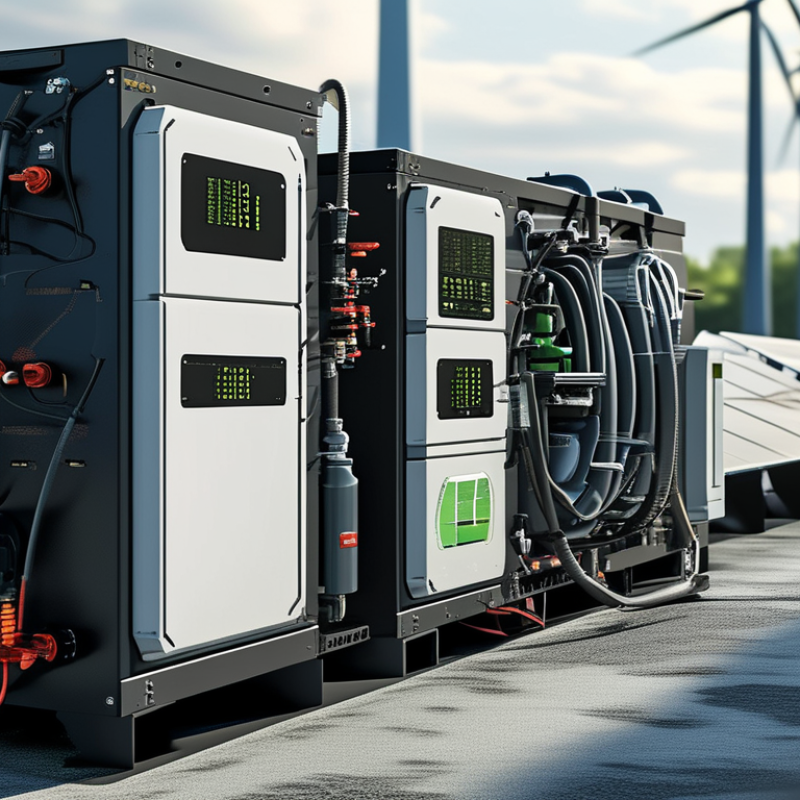
In practical projects, the system may sit beside solar panels, a wind turbine, or a microgrid. During a cloudy interval, batteries can supply longer demand. When a motor starts, a fast device can absorb the sharp transient. The controller must decide when each resource charges or discharges. That decision uses voltage, state of charge, power limits, and safety data. Small details matter. A poorly tuned controller may waste energy or age components unevenly.

This guide explains the architecture, operating logic, benefits, limitations, and selection process behind Hybrid Energy Storage Solutions. It draws on established engineering practice, manufacturer specifications, and real-world commissioning concerns. Readers should compare round-trip efficiency, response time, usable capacity, lifecycle cost, thermal management, and protection requirements. The term “hybrid” is not always precise. Some systems are genuinely coordinated; others simply place different devices nearby. That distinction deserves attention. Reliable evaluation also requires measured site data, qualified professionals, and transparent assumptions. No design is perfect. The right system balances safety, performance, cost, and future flexibility.
What Is a Hybrid Energy Storage System?

What Is a Hybrid Energy Storage System?

What Is a Hybrid Energy Storage System?

A hybrid energy storage system combines two or more storage technologies with different operating strengths. Lithium-ion batteries can respond within milliseconds, supporting frequency control and sudden load changes. Longer-duration systems, such as flow batteries, thermal storage, or hydrogen, can preserve energy for several hours or days. The control system decides which technology should charge, discharge, or remain ready.

The benefit is practical. A solar farm may use fast batteries during cloud movements, while longer-duration storage supplies electricity after sunset. This arrangement can reduce battery stress and improve asset utilization. The International Energy Agency reported in Batteries and Secure Energy Transitions (2024) that battery storage capacity may need to reach about 1,200 GW by 2030 under its net-zero pathway. Hybrid designs could help manage that expansion, especially where renewable output changes sharply.

A hybrid system is not automatically better. It adds inverters, software, maintenance tasks, and safety considerations. The National Renewable Energy Laboratory’s Annual Technology Baseline highlights how storage costs and performance vary by duration and application. That difference matters. A system designed only around purchase price may perform poorly during repeated cycling. Real projects should compare round-trip efficiency, degradation, response time, usable capacity, and replacement schedules. The analysis can be imperfect. Weather, tariffs, and future market rules are difficult to predict. Good engineering leaves room for those uncertainties.

What Is a Hybrid Energy Storage System?

Data Dimension Typical Characteristics Practical Function
Definition An energy storage system that combines two or more storage technologies with different performance characteristics. Balances high energy capacity, rapid power delivery, efficiency, cost, and operating life.
Common Storage Combination Electrochemical batteries combined with supercapacitors, flywheels, or other storage technologies. Allows each technology to handle the part of the load for which it is best suited.
Battery Role Provides relatively high energy capacity for sustained charging and discharging. Supports energy shifting, backup power, renewable-energy smoothing, and longer-duration loads.
High-Power Component Role Supercapacitors and flywheels can deliver or absorb high power for short periods. Handles short-duration peaks, rapid transients, regenerative braking, and power-quality events.
Response Time Typically ranges from milliseconds to seconds, depending on the storage technologies and power-conversion system. Improves response to sudden changes in load, renewable generation, or grid frequency.
Discharge Duration Can cover short bursts of seconds or minutes and sustained operation from minutes to several hours, depending on system sizing. Provides both fast power support and longer-duration energy delivery.
Power-to-Energy Ratio Can be designed across a wide range because power-oriented and energy-oriented devices are sized separately. Offers more flexible system sizing than a single-storage-technology design.
Round-Trip Efficiency Often approximately 70%–95%, depending on the technologies, operating conditions, power electronics, and control strategy. Determines how much of the stored electricity can be recovered after a complete charge-and-discharge cycle.
Cycle-Life Benefit Frequent high-power pulses can be assigned to a high-cycle-life component instead of being handled entirely by the battery. May reduce battery stress, heat generation, and degradation when the control system is properly designed.
Power-Conversion System Uses one or more bidirectional converters, depending on whether the storage devices share or use separate electrical interfaces. Controls charging, discharging, voltage conversion, current distribution, and grid interaction.
Energy Management System Monitors state of charge, temperature, voltage, current, power demand, and operating limits. Determines which storage device should respond to fast power changes and which should provide sustained energy.
Renewable-Energy Integration Can combine rapid power balancing with energy storage for periods of low solar or wind generation. Reduces renewable power fluctuations and can improve renewable-energy utilization.
Grid Services May support frequency regulation, voltage support, peak shaving, load shifting, and backup power. Enables one system to perform several services with different power and duration requirements.
Main Advantages Flexible design, improved transient response, reduced stress on individual components, and broader operating capability. Can improve performance where a single storage technology cannot meet both power and energy requirements.
Main Challenges Higher control complexity, additional power electronics, more demanding protection requirements, and potentially higher initial cost. Requires careful electrical design, thermal management, system integration, maintenance planning, and safety coordination.

How Hybrid Energy Storage Systems Combine Different Technologies

What Is a Hybrid Energy Storage System?

A hybrid energy storage system combines technologies with different strengths. Lithium-ion batteries deliver rapid response and high power. Flow batteries provide longer discharge periods with less dependence on cycle depth. Supercapacitors handle sudden spikes, such as motor starts or cloud-driven solar fluctuations.

The control system decides which device should respond. A supercapacitor may absorb a two-second surge, while a battery supplies power for several hours. This division reduces thermal stress and can extend battery service life. Thermal storage or hydrogen systems may also support longer-duration needs. The combination depends on load patterns, site conditions, safety requirements, and operating costs.

The scale of this need is significant. The International Energy Agency’s Batteries and Secure Energy Transitions report estimates that global battery storage capacity must reach about 1,200 GW by 2030 in its net-zero pathway. The report also identifies storage as essential for integrating more variable renewable generation. Yet capacity alone proves little. A poorly tuned controller can increase losses and accelerate degradation. Real projects need measured data from temperature sensors, power meters, and battery management systems.

The best architecture is rarely the most complicated. Engineers should compare round-trip efficiency, response time, usable capacity, maintenance, and end-of-life planning. That comparison can expose uncomfortable trade-offs. Hybrid systems are promising, but they still require careful commissioning and long-term monitoring.

Key Components and Operating Principles

A hybrid energy storage system combines two or more storage technologies with different strengths. A common arrangement pairs a lithium battery with a supercapacitor. The battery supplies steady energy, while the supercapacitor responds to sudden power changes. Other designs may combine different battery chemistries or mechanical storage units.

Key components include storage modules, a bidirectional power converter, a DC bus, sensors, and an energy management system. A thermal management unit controls heat around the battery cells. Protection circuits monitor overcurrent, overvoltage, insulation faults, and temperature. During installation, cable length and connector resistance also matter. Small losses can become significant at high current.

The energy management system divides power according to demand. During acceleration, a fast power request can come from the supercapacitor. The battery then provides longer-lasting energy. During charging, the converter directs current to each storage unit according to voltage, state of charge, and temperature. The controller also estimates battery health, although these estimates are never perfect. Measurements can drift.

Control quality is critical. Poor coordination may increase battery stress instead of reducing it. A practical system needs calibrated sensors, clear fault responses, and regular inspection. Engineers often test rapid load changes, low-temperature operation, and repeated cycling before approving the design. One overlooked issue is balancing performance against cost. More components can improve response, but they also create more failure points. The system may look efficient on paper. Real operating data can challenge that assumption.

What Is a Hybrid Energy Storage System?

A hybrid energy storage system combines technologies with different power and energy characteristics. Fast-responding devices handle short-duration fluctuations, while energy-dense batteries support longer discharge periods.

Operating principle: A power-conversion system and energy-management controller divide demand between storage technologies. Supercapacitors and flywheels can respond rapidly to spikes, while lithium-ion and flow batteries provide sustained energy.

Advantages and Limitations of Hybrid Energy Storage Systems

What Is a Hybrid Energy Storage System?

Advantages and Limitations of Hybrid Energy Storage Systems

A hybrid energy storage system combines two or more storage technologies. Common combinations include batteries, supercapacitors, and thermal storage. Each unit handles a different demand. Batteries can provide steady energy, while supercapacitors respond quickly to sudden power changes. This arrangement suits microgrids, renewable energy sites, and facilities with unstable loads.

The main advantage is better operational flexibility. A fast-response device can absorb a sharp load spike within seconds. The battery then supplies energy for longer periods. This division may reduce battery stress, heat buildup, and frequent cycling. It can extend service life and improve system reliability. In practical installations, control software also helps match storage output with solar production and evening demand. The result can be smoother power delivery.

However, hybrid systems are not automatically cheaper or more efficient. They require additional sensors, converters, protection equipment, and control logic. Integration can become difficult when devices age at different rates. Maintenance teams need clear operating data and suitable technical training. A spreadsheet may show attractive savings, yet miss cooling costs or replacement labor. This is where planning becomes overly optimistic. Hybrid storage also occupies more space and needs careful fire protection and electrical separation. Poorly tuned controls may cause unnecessary switching, reducing the expected benefits. Performance should be checked under real load patterns, not only laboratory conditions. Balancing cost, response speed, safety, and long-term maintenance remains the central design challenge.

Common Applications and Future Development Trends

What Is a Hybrid Energy Storage System?

A hybrid energy storage system combines technologies with different strengths, such as batteries, supercapacitors, thermal storage, or hydrogen. Batteries provide sustained energy, while supercapacitors respond quickly to sudden power changes. This combination can reduce battery stress and improve system flexibility.

Common applications are expanding with renewable power. Solar farms pair batteries with photovoltaic panels to shift midday electricity into evening demand. Wind projects use storage to smooth rapid output changes. Remote clinics and industrial microgrids can combine solar, batteries, and backup generation for steadier power. The International Energy Agency reported that global battery storage additions exceeded 40 GW in 2023, more than doubling from the previous year. Yet, capacity alone does not show whether these systems deliver reliable power during long outages.

Future development will focus on longer duration, smarter controls, and lower lifecycle costs. The U.S. Department of Energy’s Long Duration Storage Shot targets a 90% reduction in storage costs by 2030. Digital energy-management systems may coordinate batteries, thermal units, and flexible loads within seconds. Grid-forming inverters are also gaining attention because they can support frequency and voltage stability. Recycling will matter more as deployment accelerates. The International Renewable Energy Agency recorded 473 GW of new renewable capacity in 2023, creating stronger demand for storage integration. Reported figures are not perfectly comparable. Real projects still face permitting delays, imperfect forecasts, and uneven maintenance skills.

The gap remains.

Get a quote
Open chat
1
Hi! How can we help you?
Chat with Pelican Containers